Knowledge sharing • 6 min read •
1/3 Monkey see, monkey prompt
Tamás Rácz
Lead IT Business Analyst
Or: why developing with AI isn't the same as throwing instructions at a chatbot and hoping for the best


AI is fundamentally changing software development. It puts capabilities in developers’ hands that seemed unimaginable just a few years ago: we can generate complete components, APIs, database models, tests, or even entire applications in minutes.
The barrier to entry has dropped dramatically. Today, even people who previously only encountered programming as users can put together a working application.
In itself, that’s a fantastic opportunity. The problem starts when we confuse working code with high-quality software, speed with efficiency, and using AI with engineering.
One of the biggest dangers of vibe coding is that apparent success can very easily mask real problems.
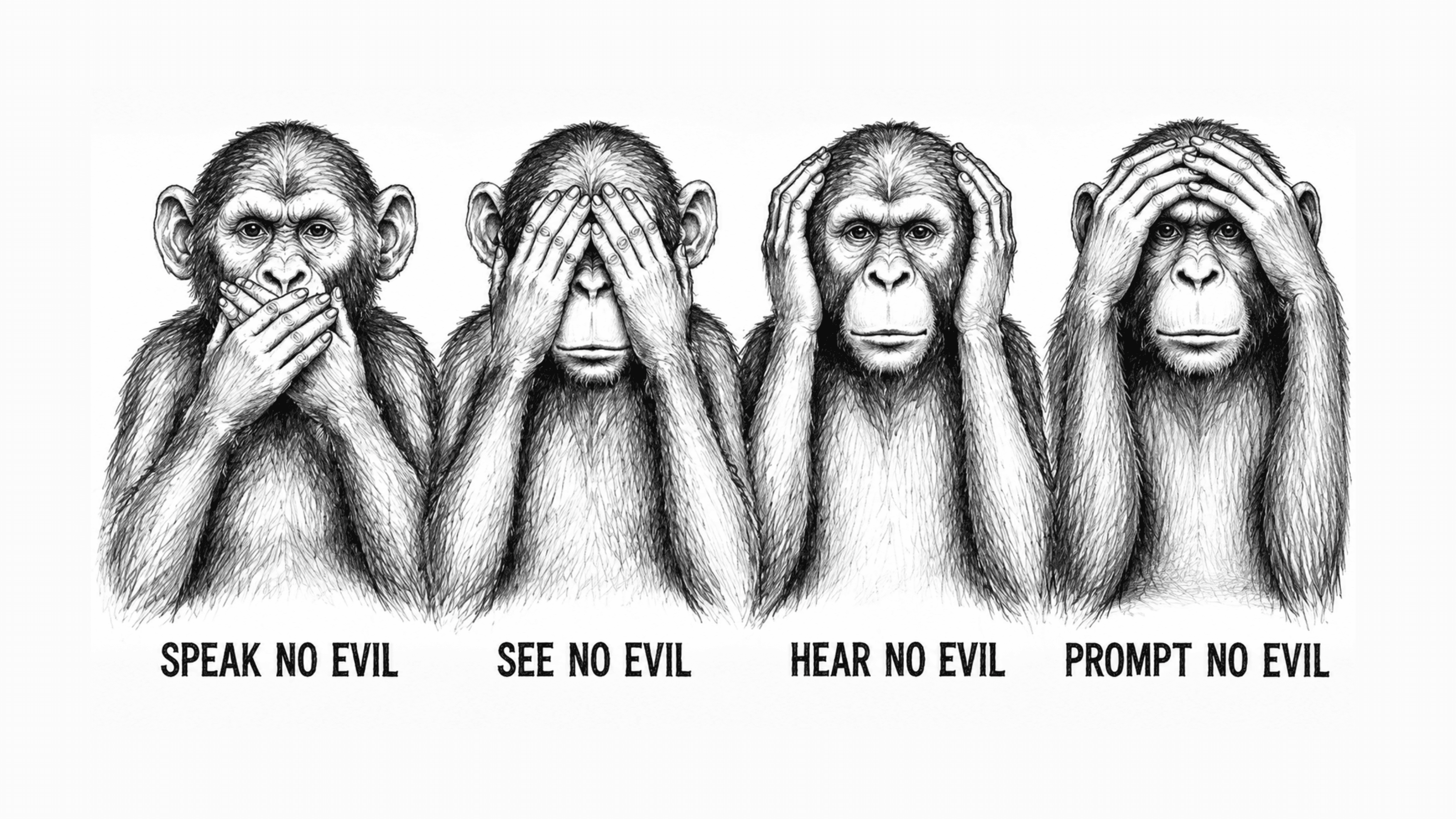
Monkey see, monkey prompt
As the classic saying goes: monkey see, monkey do. See it, copy it, done.
AI-assisted development has produced a new version: monkey see, monkey prompt.
We open Cursor, Claude Code or another AI tool, describe what we want, and accept the generated changes. If it doesn’t work, another prompt. If it’s still not right, one more. And when it finally comes together, on to the next task.
At first glance, this looks like an extremely efficient workflow. There’s just one small problem: often we no longer know exactly what we’ve built.
We don’t necessarily understand the chosen architecture, the data flow, the dependencies, the error handling, or the trade-offs the AI made along the way.
The code is done, the application starts, the demo works. But is it actually ready for real users?
Working code isn’t the same as good software
AI is extremely good at solving the task it’s given. It’s not necessarily as good at questioning the task itself.
If we ask it to create a new endpoint, it will probably create one. If we ask it to store some data, it will. If we ask it to fix a bug, it will change the code.
But:
- Is the change really happening in the right place?
- Does it fit the existing architecture?
- Does it violate a business rule?
- Does it handle edge cases and invalid input properly?
- Does it introduce a security vulnerability?
- Does it cause a regression in another feature?
- Will the solution still be maintainable six months from now?
For these questions, it isn’t enough for the AI to reply: “I have implemented the requested changes.”
The compiler doesn’t flag every problem either. A successful build doesn’t mean correct behavior. And green tests only prove that we found no errors in the cases we checked.
Software development isn’t a code-generation contest. The goal isn’t to produce as many lines of code as possible, but to create a reliable, understandable and maintainable system.
AI doesn’t automatically know the whole system
One of the most common mistakes is treating AI as if it knew our project perfectly.
In reality, the model can only work with what we give it. The size, quality and freshness of the context fundamentally determine the quality of the answer.
Development built on poorly prepared context is like asking a new developer to modify a complex enterprise system without giving them any architecture documentation, business rules, interface specifications or record of past decisions.
What’s more, AI won’t necessarily tell you when its information is incomplete. It often prefers to infer, assume and fill in the gaps.
The result can be a solution that is technically entirely plausible, yet doesn’t fit how the system works or what the business expects at all.
That’s why good AI-based development doesn’t start with writing a prompt, but with building the right context.
Technical debt can pile up faster than ever
In traditional development, one of the limits on accumulating technical debt was development speed itself. Even a bad decision took time to implement.
AI significantly reduces that limit.
With a few well-phrased instructions, we can produce hundreds or even thousands of lines of code. If the solution rests on flawed foundations, we can build further layers on top of it just as quickly.
The problem isn’t necessarily the first bad solution. It’s that the next five features are already built on it.
It’s especially dangerous when we fix AI-generated code with more AI-generated code, without understanding the original problem.
That’s how you can easily end up with a system in which:
- the same business logic appears in several places;
- there are unjustified dependencies between components;
- error handling is haphazard;
- the tests validate the implementation, not the expected behavior;
- it becomes increasingly hard to understand what consequences a change will have.
AI can accelerate not only development, but also the spread of bad decisions.
The developer’s role isn’t disappearing – it’s becoming more valuable
Many people think AI means less and less technical knowledge will be needed. For certain tasks, the amount of manual work that used to be required really is shrinking.
But that doesn’t mean expertise matters less.
Quite the opposite.
The more code AI can produce, the more important it becomes that someone is able to judge its quality.
Increasingly, the developer’s job is:
- understanding the problem precisely;
- choosing the right architecture and technical solution;
- defining the context and constraints;
- directing the AI’s work;
- critically reviewing the generated solutions;
- designing the testing strategy;
- enforcing quality and security requirements.
This doesn’t mean we have to write every generated line by hand or review it in minute detail. It does mean we can’t delegate responsibility to the model.
AI can be a developer’s most powerful tool, but it can’t replace professional accountability.
What to do instead of vibe coding?
I don’t think vibe coding should be rejected entirely. For prototypes, proofs of concept, small automations or simple internal tools, a faster, looser approach can be genuinely useful. Not every development needs a strictly structured, context-driven process.
At the same time, there’s a level of system size, complexity, business exposure, and regulatory or legal pressure where this kind of deliberateness stops being merely recommended and becomes – only slightly exaggerating – essential. So the problem isn’t vibe coding itself, but applying the same approach everywhere, regardless of the nature and risks of the task.
In those cases, it’s worth setting up a more deliberate, context-driven development process, in which AI doesn’t just execute instructions, but the entire development work happens within proper boundaries and in a verifiable way.
The key steps are:
-
Understand the problem first.
Don’t start by asking the AI for code. Define what you want to achieve, which business rules must be met, and what constraints exist. -
Build the right context.
Hand over the project’s relevant documentation, architecture, coding standards, data model and related decisions. Don’t expect the AI to figure out what you haven’t documented yourself. -
Plan before you implement.
For more complex tasks, use a planning phase. Ask the AI to first analyze the existing solution, identify the affected components, and lay out possible alternatives and risks. -
Move in small, verifiable steps.
Don’t hand over an entire system in a single prompt. Break the task into smaller, well-defined units, and check the result after each step. -
Review the solution, not just the code.
Alongside the tests, examine the architectural decisions, business logic, security, performance and maintainability. You can even have the AI run a separate review – ideally with a different model or a different set of criteria. -
Stay the decision-maker.
AI can suggest, analyze, implement and test. But accepting the solution remains the developer’s responsibility.
In the next episode, we’ll look at how to deliberately build an AI-based development lifecycle.
The real competitive advantage isn’t in prompting
Learning to use AI is now almost a baseline skill. But being good at prompting doesn’t, on its own, make someone a good software developer.
The real competitive advantage comes from combining technical knowledge, systems thinking and the possibilities of AI.
Someone who understands the problem, knows the system, can provide the right context and critically evaluates the results will get orders of magnitude more out of these tools than someone who simply throws instructions at a chatbot.
In the coming years, the most valuable developer probably won’t be the one who writes code fastest, but the one who can most effectively steer the entire development process.
Because ultimately, the question isn’t whether AI can write code.
It’s whether we know what code we need it to write, why exactly that code, and how we make sure the result is genuinely a good solution.
Monkey see, monkey prompt. But just because the monkey can generate code doesn’t make it a software engineer.